



An Open Letter to the Honorable Health Minister of Nepal: From One Nurse’s Journey to Another




Honorable Minister,
With due respect, I extend my sincere congratulations on your leadership as the Health Minister of Nepal. Your journey from nursing to national leadership is not only inspiring but also deeply meaningful to the entire nursing community.

This is not a letter to inform you. You already know.
You have walked the same corridors we walk. You have stood beside patients in their most vulnerable moments. You have felt the silent exhaustion behind a nurse’s composed face. And today, you sit in a place where those lived realities can be transformed into policy, into dignity, into change.
That is why this letter is not a reminder, it is a reflection.
I write to you not just as an individual, but as a nurse, part of a generation that continues to inherit both the strength and the struggles of nursing in Nepal.
Our history is not written loudly, but it is deeply felt. It lives in the quiet resilience of nurses who built this profession with limited recognition, in classrooms that tried to shape excellence with scarce resources, and in hospitals where care was given even when conditions were far from fair.
We have progressed, but not proportionately.
We produce skilled, compassionate nurses who are globally competitive, yet our system struggles to retain them. We teach professionalism and critical thinking, yet many enter workplaces where their voices are unheard. We speak of healthcare advancement, yet the foundation of nursing, often remains fragile.
And yet, something is different now.
This new generation of nurses understands what nursing truly is not just as a duty, but as a science, a discipline, a voice, and a leadership force. They are more aware, more educated, more assertive, and more connected to global standards than ever before. They do not only want to serve; they want to shape the system they serve in.
But awareness without opportunity becomes frustration.
If we are serious about strengthening nursing in Nepal, then the changes must be visible, measurable, and immediate:
Government opportunities must expand. Qualified nurses should not be left waiting indefinitely while the system claims shortage. Open more positions. Create pathways. Let merit meet opportunity.
Private hospitals must be held accountable. Nurses must be treated with the dignity they deserve not as replaceable labor, not as a secondary option, but as essential professionals. Fair and standardized salaries must be ensured at every level, as recommended, not negotiated down to the bare minimum.
Because exploitation hidden under professionalism is still exploitation.
Perhaps the greatest paradox remains this:
Nurses are essential everywhere, yet empowered nowhere enough.
Honorable Minister, you understand this not as an observer, but as one of us.
This moment in Nepal’s history is rare. For once, the gap between experience and authority has narrowed. The person who once followed orders now has the power to shape them.
So the question is not what the problems are.
The question is, what will we dare to change now that we can?
Can we imagine a system where nurses are not just present, but influential?
Where choosing to stay in Nepal is not a compromise, but a pride?
Where education is not just expansion, but excellence?
Where care for patients begins with care for caregivers?
Change in nursing will not come only from policies it will come from perspective. From recognizing that nursing is not a supporting role in healthcare; it is a central force.
History will remember this phase not for what was known, but for what was done.
And when that history is written, it will not ask what nurses endured, it will ask what was changed when one of their own held power.
But beyond all questions and expectations, we hold on to one belief:
That nursing in Nepal is not waiting for validation, it is moving toward transformation. And with it, a hope remains that dignity, opportunity, and respect will no longer be aspirations, but reality.
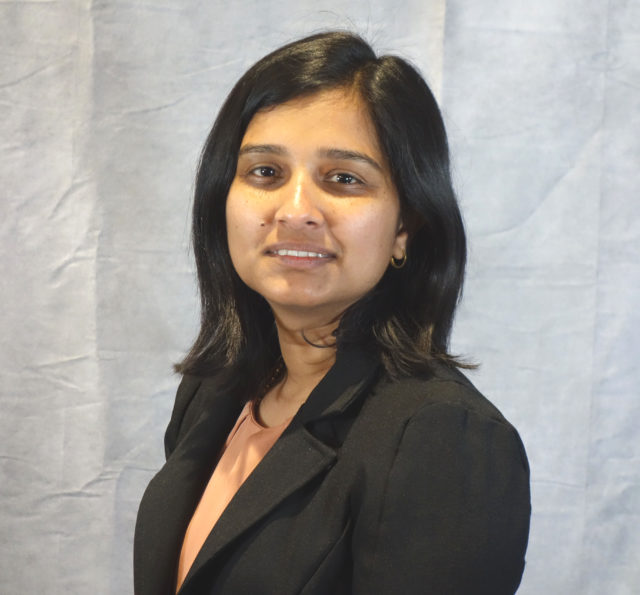
(#Dahal is an Associate Professor in the Department of Nursing at Devdaha Medical College.)
विश्लेषण, सूचना, जानकारी तथा विज्ञापनका लागि हामीलाई (nepalihealthnews@gmail.com) मा सम्पर्क गर्नुहोला।

-
डिग्री छ, ज्ञान छ- तर परिवार नियोजन किन छैन ?
-

वीर अस्पतालमा मुभमेन्ट डिसअर्डर, पार्किन्सन रोग, छारे रोग तथा मेरुदण्ड सम्वन्धी विशेष क्लिनिक सञ्चालन हुने
-

दैनिक एक मुठी बदाम तथा अन्य गेडागुडी खाँदा उच्च रक्तचापको जोखिम कम
-

अस्पतालबाट डिस्चार्ज भए पूर्वप्रधानमन्त्री झलनाथ खनाल
-

नाइजेरियामा करिब १२ वर्षपछि दोहोरियो इबोला
-
-
दशैंमा दाँतको ख्याल कसरी राख्ने ?
-

देशका विभिन्न स्थानमा ट्रमा सेन्टर विस्तार तयारीमा छौँ : स्वास्थ्य मन्त्री मेहता
-

अमेरिकन सोसाइटी अफ क्लिनिकल अन्कोलोजीको एसिया प्यासिफिक क्षेत्रीय परिषद् सदस्यमा डा. अरुण शाही मनोनित
-
तेल, रक्सी र मुटु
-
दसैँ बिदामा अस्पतालका अत्यावश्यक सेवा नियमित राख्न स्वास्थ्य मन्त्रालयको पत्राचार
-